Ghostwritten Thought Leadership

Filters & Sorting

How commercial SATCOM can prepare for defence missions - Defence Industry Europe

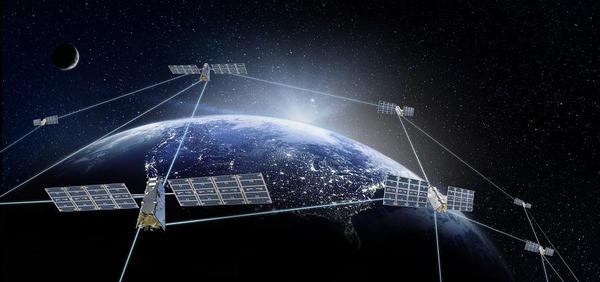
By Mike Adamson, BGen (Ret’d)From ports to tanks to airplanes, militaries have historically owned and operated the means and infrastructure by which they conduct missions. For modern militaries, satellite communication (SATCOM) networks are a critical part of that infrastructure. That said, very few defence organizations have the significant resources to launch, operate, and maintain their own proliferated constellations of tens, hundreds, or even thousands of satellites; even as the need for sa...

Making COMSATCOM accessible for large-scale defense requirements 

The rise of peer adversaries and new offensive weapons is changing communications requirements from military command headquarters to the warfighting edge. That brings an increased need for secure, reliable networking capacity to meet real-time response demands of modern battlefield situations. Rapid communications will also be integral to achieving the vision of the Golden Dome multi-layer defense system proposed by the current administration. Traditional military satellite communications (MILSA...

Resolving the disconnect between industry and the DOD’s space strategy

In September 2023, the U.S. Department of Defense released a congressionally mandated report on its strategy to protect space-based assets. This unclassified version of DoD’s top-secret space strategy incorporates multiple defense approaches, including building resilient network architectures, maintaining situational awareness of the space environment, and defending against adversary attacks. The Commercial Space Integration Strategy, published in April of this year, lays out four priorities fo

How commercial SATCOM can prepare for defence missions - Defence Industry Europe

By Mike Adamson, BGen (Ret’d)From ports to tanks to airplanes, militaries have historically owned and operated the means and infrastructure by which they conduct missions. For modern militaries, satellite communication (SATCOM) networks are a critical part of that infrastructure. That said, very few defence organizations have the significant resources to launch, operate, and maintain their own proliferated constellations of tens, hundreds, or even thousands of satellites; even as the need for sa...
Three Critical Elements for Tackling Golden Dome Complexities - Defense Opinion

Golden Dome, the Trump administration’s proposed initiative to develop a multi-layered missile defense system for countering homeland attack threats, is the hot topic in Department of Defense (DoD) circles. This updated take on the 1980s Strategic Defense Initiative (SDI) intends to leverage mature and maturing technologies, including artificial intelligence (AI), machine learning (ML) and more, that have evolved dramatically over the last four decades. U.S. Space Force (USSF) Gen. Mike Guetlein...

CMMC and SWFT: Why the DIB Needs To Embrace Both

In late April, the U.S. Department of Defense (DOD) chief information officer signed a memo establishing a new initiative known as Software Fast Track (SWFT). The intent is to modernize the government’s authority-to-operate (ATO) process, which is the way the department acquires, tests and authorizes commercial software and services provided directly to the government. Ask any vendor, and they will likely tell you the ATO process is outdated, cumbersome, expensive and far too lengthy—often taki...

Mission impact: The critical factor in IT modernization ROI

As federal agency leaders look to improve mission outcomes, technology modernization plays an essential role. Modernization efforts will produce operations and maintenance savings, for example by lowering cyber risk, increasing cloud hosting efficiency, improving resilience, reducing system downtime, and even lowering training costs due to better system design. These are all beneficial results. Of course, modernization requires investment. A custom agency-owned application will take a large in-h...

AI at the crossroads of cybersecurity, space and national security in the digital age

Technological prowess, especially regarding humanity’s increased presence in space, is increasingly becoming the linchpin of global competitiveness and national security. There, new opportunities to integrate AI are accompanied by a new generation of risks. Artificial intelligence in particular plays a crucial role in democratizing access to space exploration and research, opening it to many beyond just governmental space agencies, as evidenced by the large number of commercially financed a...

Why we need global cooperation to secure our satellite infrastructure

Satellites play a critical role in many dimensions of modern life, from navigation and weather forecasting to communications and national defense. Our global society could not function effectively without them. Yet even while our dependence grows, proliferating satellite infrastructure faces serious threats from bad actors, particularly those at the nation-state level with the capability to reach into space.Whether traditional jamming for broadcast interference, injecting malicious data to alter...

Small departments, big changes: A blueprint to modernizing the heart of policing

The heart of policing in the United States is made up of the thousands of departments employing fewer than 100 full-time police officers. According to the Bureau of Justice Statistics, about 92% of the 17,541 state and local law enforcement agencies in the United States employ fewer than 100 full-time sworn police officers, and only 80 agencies employ more than 1000. The resource constraints smaller law enforcement organizations face challenge their ability to adapt to today’s fast-changing poli

Five steps to secure the Low Earth Orbit satellite environment

Much of modern life is powered by satellites. Communications, navigation, defense, timing, weather, environmental and other critical systems depend on data transmitted through a rapidly growing volume of satellite networks. This integral component of our critical infrastructure has always faced some level of security risk, such as from tracking and monitoring, signal jamming and other orbital threats. However, traditionally there had not been any significant events with a widescale impact. That

Satellites and the specter of IoT attacks

In the vast expanse of space, satellites orbit silently, serving as the connected backbone of our modern world. A fast-proliferating network of satellites forms the critical infrastructure that supports global communication, navigation, weather forecasting, defensive operations and more. Today’s global space economy is huge, forecasted to total more than $600 billion annually in 2024. Internet of Things (IoT) components are integral to next-generation satellites. Designed to optimize efficiency

PERSPECTIVE: The Imperative to Better Protect Our Elected Representatives in a Changing Threat Landscape - HS Today

Elected and non-elected public officials are increasingly subject to personal risk from members of the public. As an example, according to data published by the United States Capitol Police (the law enforcement agency charged with protecting members of Congress), cases related to “concerning statements and threats against members” jumped from 3,939 in 2017 to 9,625 in 2021. Those threats to members and their families, staff and sometimes their supporters cross party lines and occur in both rural

Business Travel Executive May/June 2023 Page 60

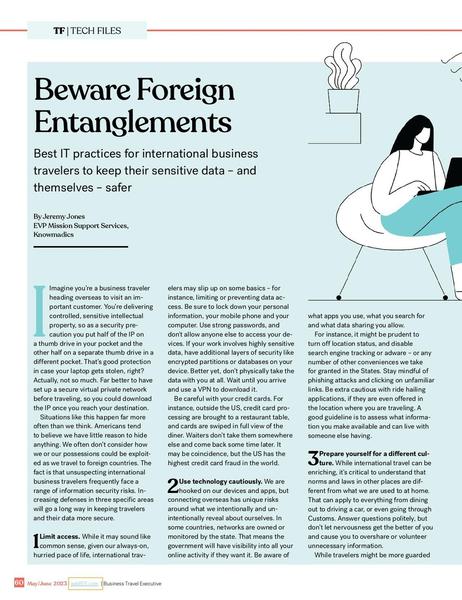
TF | TECH FILES Beware Foreign Entanglements Best IT practices for international business travelers to keep their sensitive data – and themselves – safer By Jeremy Jones EVP Mission Support Services, Knowmadics I 1 60 Imagine you’re a business traveler heading overseas to visit an im-portant customer. You’re delivering controlled, sensitive intellectual property, so as a security pre-caution you put half of the IP on a thumb drive in your pocket and the other half on a separate thumb drive in a

Four Elements of Security Planning for Crowd Emergencies

As much of the world has emerged from COVID-19 pandemic quarantine, large cultural gatherings are back. While that’s happy news for many, it also means a return to elevated security risks. A Halloween 2022 crowd surge in Seoul, South Korea, left more than 150 dead and many more injured. Violence at an October Indonesian soccer match resulted in more than 100 people being killed in a stampede. With the American NFL Super Bowl coming up on 12 February, authorities need to be on high alert for any
Load More Articles